
Celiac disease is an immune disorder in which gluten ingestion results in damage to the small intestine, resulting in digestive problems and malnutrition. It is estimated that approximately 1% of the global population is estimated to be affected by celiac disease.(1) However, gluten avoidance remains the only treatment and is insufficient for full symptom resolution in many patients.(2)
Classically, celiac disease is diagnosed and evaluated through pathologist review of duodenal biopsies to evaluate hallmark histological changes associated with inflammation and villous atrophy (measured through intraepithelial lymphocyte (IEL) abundance and villus height to crypt depth (Vh:Cd) ratio. However, sampling quality and pathologist variability have complicated this process.(3-5)
At PathAI, we are committed to improving patient outcomes through histology. In this blog, we’ll describe how we’ve transformed our biopharma lab workflow for celiac disease to optimize how celiac biopsies are scored and improve clinical trial standardization.
End-to-End Digital Pathology solutions
CAP/CLIA certified and GCP/GCLP compliant, PathAI’s Biopharma laboratory offers seamless end-to-end service for clinical trials in celiac disease and beyond.
- Anatomic pathology operations: Tissues can be received by the laboratory in a variety of ways, including as unprocessed specimens, formalin-fixed paraffin-embedded blocks, and unstained slides. Upon receipt, specimens can be processed and stained on-site, allowing a central, streamlined histology process. Slides can also be received for subsequent staining and review. Despite this flexibility, our preference is to embed the specimens at our laboratory given our expertise in ensuring proper tissue orientation, a critical factor for Vh:Cd evaluation.
- Expert readers: PathAI is able to coordinate expert central readers through our extensive network of contributor pathologists with a wide array of surgical pathology subspecialties.
- Digital pathology operations: The laboratory is equipped with several state-of-the-art slide scanners, including Leica Aperio AT2, Leica GT450, and Ventana DP200, to digitize clinical trial specimens for review by expert pathologists anywhere in the world.
- AI-powered insights: PathAI’s GCP/GCLP compliant 21 CFR Part 11 AISight Clinical Trials (CT)* platform is purpose-built and validated specifically for digital histology assessment and scoring, supporting both manual reads and AI-powered assessments.
Celiac-specific workflow
The villus height-crypt depth ratio is a key primary endpoint for celiac disease clinical trials. However, challenges with tissue processing and sectioning, combined with the need for rigorous alignment amongst readers, make finding an evaluable villus-crypt unit akin to finding a specific needle in a stack of needles. Subjectivity in the measurement process further complicates the evaluation of this clinical trial endpoint. “Where, exactly, does a crypt end and villus begin?” is the proverbial question heard throughout the gastrointestinal pathologist community.(6)
At PathAI, we set out to establish a process for evaluating Vh:Cd that was reproducible, consistent, and robust to changes in histology technicians. Our full laboratory and pathology team collaborated to establish a processing protocol for duodenal tissue that maximizes the likelihood of having an evaluable villus-crypt unit.
Biopsy processing. The multiple duodenal biopsies typically taken for clinical trial enrollment are embedded separately. Importantly, biopsy embedding is done such that the mucosal surface is perpendicular to the surface of the embedding well to optimize orientation for microtome sectioning.
Slide generation. We developed a slide sectioning protocol that enables us to detect at least one evaluable villus-crypt unit with a 73% probability across only two H&E-stained slides. The elegance of this approach prevents pathologist fatigue without sacrificing quality or number of evaluable Vh:Cd units. Further, simultaneously obtained sections are utilized for CD3 immunohistochemical staining, optimizing overall tissue use. Indeed, only 50% of the biopsy is consumed for the entire workflow, including Vh:Cd and CD3 IEL assessment.
Vh:Cd evaluation. Perhaps surprisingly, there is no ground truth for Vh:Cd assessment. Thus, each celiac disease clinical trial must determine its own approach, preferably with input from experts in the field. Agreeing upon the criteria for items such as 1) What is an evaluable villus-crypt unit?, 2) Where should the measurement line start?, 3) When should the measurement line bend, and 4) Where is the villus-crypt junction? are critical to inter-reader agreement. Further, the field is moving from a single reader paradigm to a consensus reader panel paradigm that typically consists of three readers, further emphasizing the importance of the aforementioned alignment.
To optimize inter-reader agreement, PathAI leads a comprehensive reader harmonization program to maximize alignment of pathologist reads prior to trial initiation.
By focusing on the minute details of each Vh:Cd measurement from each reader (some of which are described above) the cumulative result is harmonization of the central reader panel Vh:Cd measurements. This translates to greater consistency of biopsy assessments in the celiac disease clinical trial.
Furthermore, the use of digital measurements using the AISight CT platform streamlines the measurement process, resulting in pixel-level precision that is not possible with non-digital measurement methods. Through these efforts, PathAI pathologists have observed increased alignment in measurement practices, which has the potential to translate to more standardized Vh:Cd measurements in trial settings (Figure 1).
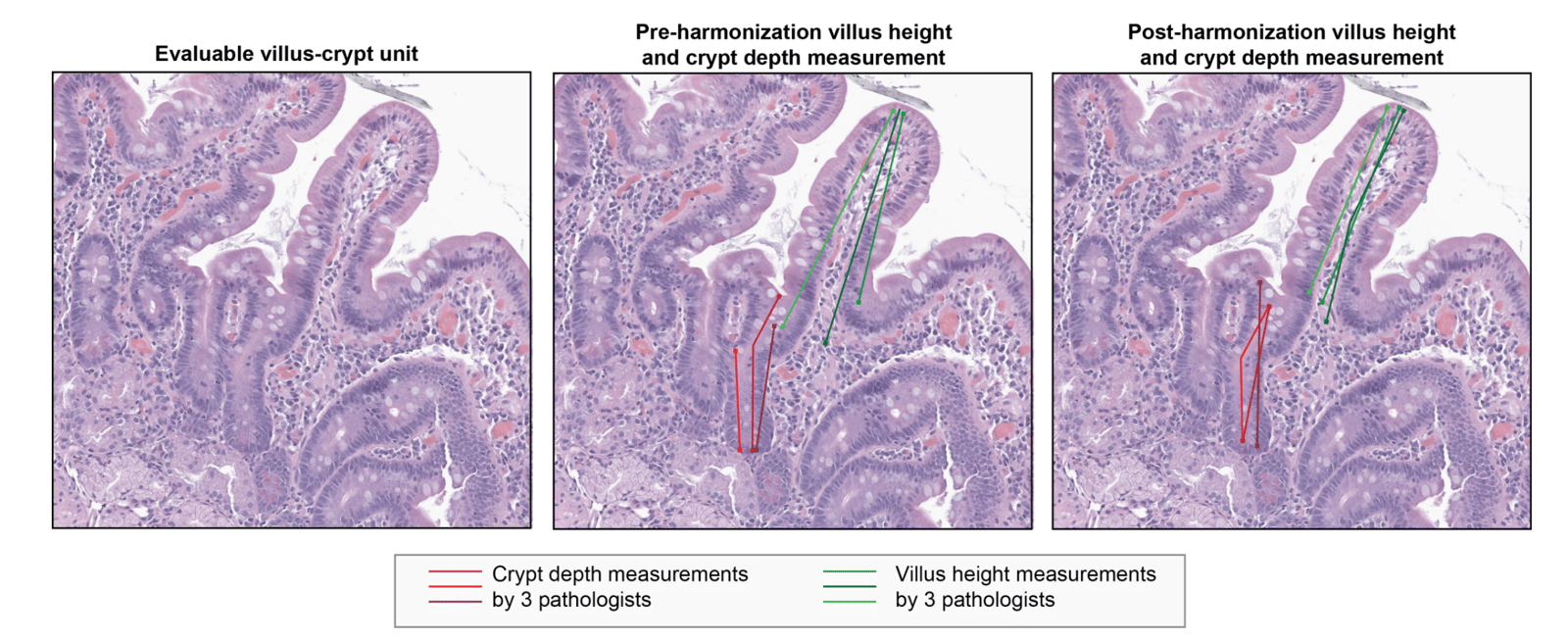 Figure 1: Simulation of the effect of pathologist harmonization on Vh and Cd measurements using the AISight Clinical Trials platform.
AI solutions for celiac pathology
On top of the laboratory expertise provided by PathAI, the ability to streamline histology assessments through the use of our algorithms further standardizes the pathology endpoints that can be obtained for celiac disease clinical trials.
An example of the potential utility of our AI solutions is for quantification of IELs in the duodenum, known to be a hallmark of celiac disease that increases with disease severity. The vast majority of these IELs are gluten-reactive T lymphocytes that cause destruction of the duodenal epithelium. The expansion of these IELs, detected using immunohistochemistry (IHC) to detect the CD3 T cell marker, is characteristic of celiac disease. Similar to Vh:Cd measurement, manual quantification of IELs can be subjective, and opportunities to standardize this process remain.
Currently, investigators have access to our AIM-CD3* model on the AISight CTplatform. From an input CD3 IHC whole slide image, this tool quantifies IELs at the slide- and region-level to inform this key histologic metric in an automated and standardized way.
Summary
Celiac disease clinical trials demand precision at every stage along the journey from biopsy embedding to pathologist read. At PathAI, we’ve built an end-to-end workflow (Figure 2) that addresses the key challenges of celiac disease evaluation, including:
- Optimized biopsy processing to maximize the likelihood of evaluable villus-crypt units
- Rigorous reader harmonization to align pathologist measurements prior to clinical trial initiation, and
- AI-powered tools like AIM-CD3 to standardize IEL quantification.
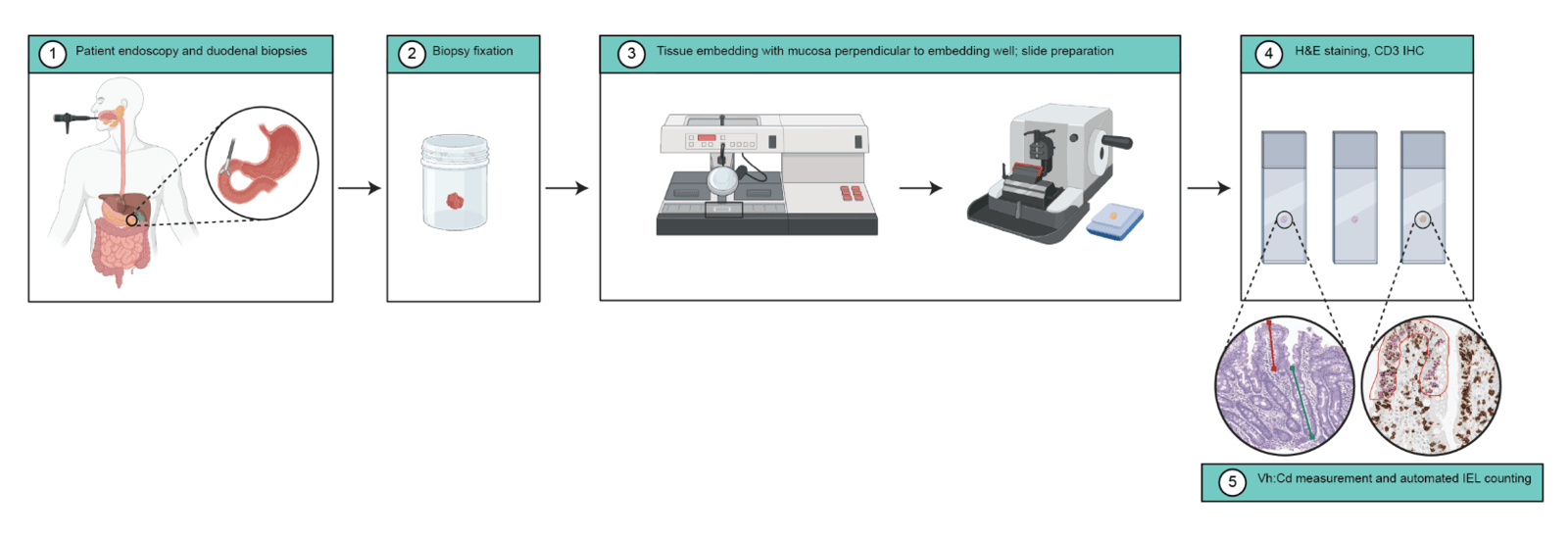
Figure 2: PathAI’s end-to-end laboratory workflow for celiac disease. Figure was generated using images from BioRender.
These solutions are currently being used for multiple partner-initiated projects, including end-to-end workflows for a phase 2 clinical trial and AI insights for a phase 1 clinical trial. Together, these capabilities reduce variability, improve reproducibility, and have potential to support more reliable clinical trial outcomes. Improved standardization in trial reads has the potential to reveal efficacy in investigational medical products that may have otherwise been masked by inconsistencies. Improvements to clinical trial endpoint measurement can expedite sorely needed solutions for celiac disease patients.
*AISight CT and AIM-CD3 are For Research Use Only. Not for use in diagnostic procedures.
References
- Singh, P., et al. (2018) Global prevalence of celiac disease: systematic review and meta-analysis. Clinical Gastroenterology and Hepatology. 16(6): 823-836.e2
- Tye-Din, J.A. (2022) Follow-up of coeliac disease. Alimentary Pharmacology and Therapeutics. 56(Suppl. 1):49–63.
- Taavela, J., et al. (2013) Degree of damage to the small bowel and serum antibody titers correlate with clinical presentation of patients with celiac disease. Clinical Gastroenterology and Hepatology. 11:166-171.
- Corazza, G.R., et al. Comparison of the interobserver reproducibility with different histologic criteria used in celiac disease. Clinical Gastroenterology and Hepatology. 5:838-843.
- Arguelle-Grande, C., et al. (2012) Variability in small bowel histopathology reporting between different pathology practice settings: impact on the diagnosis of coeliac disease. Journal of Clinical Pathology. 65:242-247.
- Taavela, J., et al.. (2021) Apolipoprotein A4 Defines the Villus-Crypt Border in Duodenal Specimens for Celiac Disease Morphometry. Frontiers in Immunology. 12:713854.